
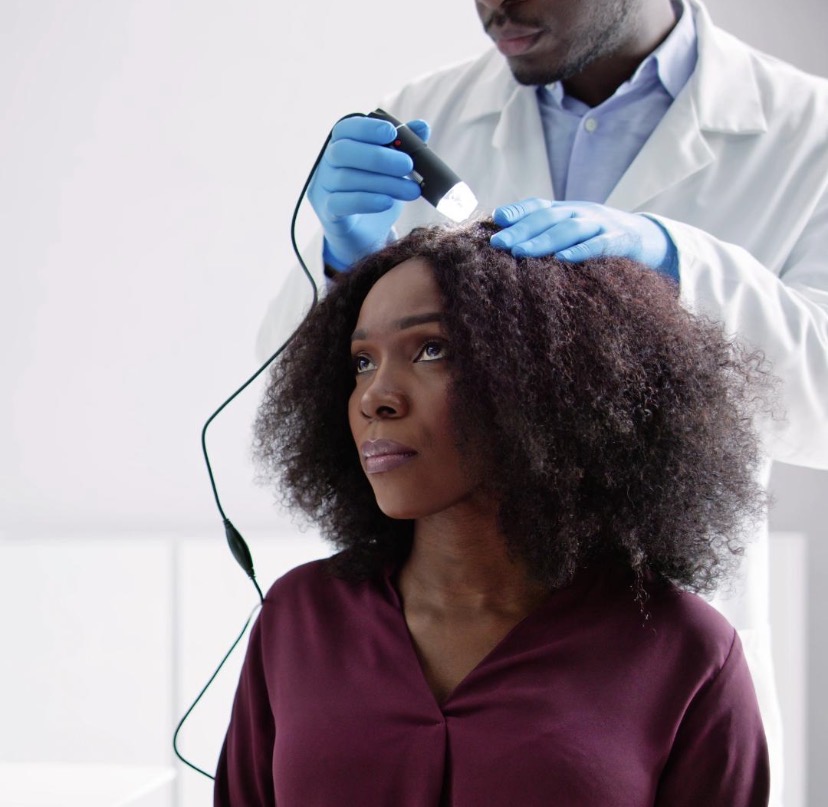
If you’ve been diagnosed with CCCA—or you suspect that something isn’t quite right with your scalp—you may wonder exactly who you should see for help.
A dermatologist? A trichologist? Both?
As a trichology student and someone who has personally navigated CCCA, I’m learning that scalp and hair care doesn’t always have to be an either/or decision. In many cases, building a care team can give you a more comprehensive approach.
A board-certified dermatologist and a trained trichologist have different roles. When those roles are understood and respected, they can complement each other beautifully.
Start With the Medical Side: The Dermatologist
Central centrifugal cicatricial alopecia (CCCA) is a form of scarring alopecia. That means inflammation can eventually damage the hair follicle and lead to permanent hair loss.
This is one reason I believe medical evaluation is so important.
A board-certified dermatologist—particularly one experienced in hair and scalp disorders—can evaluate symptoms, make or confirm a diagnosis, and determine whether medical treatment is necessary.
Depending on the individual, dermatologic care may include:
- A detailed scalp and medical history
- Examination of the scalp and hair
- A scalp biopsy when necessary to help establish or confirm a diagnosis
- Prescription topical medications
- Steroid injections when medically appropriate
- Oral medications when indicated
- Treatment and monitoring of scalp inflammation
- Evaluation for other conditions that could contribute to hair loss
These are medical services and should remain within the care of appropriately licensed medical professionals.
A trichologist does not replace your dermatologist.
But that doesn’t mean there isn’t another important piece of the puzzle.
Where Does a Trichologist Fit In?
Trichology focuses specifically on the health of the hair and scalp.
While a dermatologist handles diagnosis and medical treatment, a trained trichologist may help you better understand what is happening with your hair and scalp and develop supportive practices that complement your medical care.
Depending on their training and scope of practice, this may include education and support surrounding:
- Scalp-care routines
- Shampooing and cleansing practices
- Hair-care habits
- Protective styling practices
- Reducing unnecessary tension, heat, and manipulation
- Tracking scalp symptoms and possible triggers
- Nutrition and lifestyle habits that support overall hair and scalp wellness
- Stress-management practices
- Consistency with the care plan prescribed by your medical provider
- Recognizing changes that should be brought back to your dermatologist’s attention
I like to think of this as addressing the environment surrounding the follicle while your medical provider manages the disease itself.
Supportive Scalp Therapies a Trichologist May Offer
Trichology isn’t limited to conversations about shampoo, styling, nutrition, and lifestyle. Depending on the trichologist’s training, scope of practice, location, and the needs of the client, some trichology practices also offer hands-on scalp therapies designed to support a healthier scalp environment.
These services may include:
- Low-level light or red light therapy (LLLT): Uses specific wavelengths of light as a non-invasive therapy to support cellular activity and, in appropriate types of hair loss, potentially support hair growth.
- High-frequency scalp therapy: Uses a specialized device that delivers a mild electrical current to the scalp. It may be incorporated into some trichology practices as part of a scalp-care treatment.
- Oxygen or oxygen-infusion scalp therapy: Some practitioners use oxygen-based equipment as part of treatments intended to cleanse, hydrate, or support the scalp environment.
- Scalp cleansing and exfoliation treatments: These may help remove excess oil, product buildup, and dead skin so that the scalp can be properly cleansed and cared for.
- Hydration and soothing scalp treatments: Depending on the condition of the scalp, a trichologist may use products or therapies intended to soothe dryness and support scalp comfort.
- Scalp massage: When appropriate, gentle massage may be incorporated into a scalp-care service for relaxation and general scalp wellness.
Not every therapy is appropriate for every person or every scalp condition. This is particularly important with CCCA because it is a scarring alopecia involving inflammation and damage to the hair follicle.
Someone experiencing an active CCCA flare—with significant burning, tenderness, itching, inflammation, or other concerning symptoms—may need medical evaluation and treatment rather than simply adding more scalp therapies.
This is another reason I believe the dermatologist-trichologist relationship can be so valuable.
A dermatologist can address the medical disease process with tools such as diagnosis, biopsy, prescription medications, and steroid injections when appropriate. A properly trained trichologist can then work within their scope to provide supportive scalp care and therapies that complement—not replace—the medical treatment plan.
The question shouldn’t be, “Should I see a dermatologist or a trichologist?”
For someone living with CCCA, the better question may sometimes be:
“How can the right professionals work together to help me care for my scalp?”
Medical Treatment + Supportive Scalp Care
Imagine someone with CCCA who receives steroid injections or prescription medication from her dermatologist.
That’s an important part of treating the inflammation associated with the condition.
But what happens during the weeks between appointments?
She is still washing her hair. Styling it. Choosing products. Managing stress. Deciding whether to use heat. Trying to remember when her symptoms started or whether the itching and tenderness are getting better or worse.
Those everyday decisions matter too.
This is an area where trichology can provide additional education, support, and accountability.
The goal isn’t to compete with medical treatment.
The goal is to support it.
Why Communication Matters
One of the things I’m learning as a trichology student is the importance of knowing when something is outside of your scope.
If a client has unexplained hair loss, significant inflammation, pain, pustules, rapidly progressing thinning, or other concerning scalp changes, a trichologist should recognize when medical evaluation is needed.
Likewise, someone already under the care of a dermatologist should not discontinue prescription medication or change a medical treatment plan based solely on non-medical advice.
Your dermatologist should know what you’re doing outside of the medical office too—including supplements, scalp treatments, products, or other therapies you’re using.
Everyone should be working toward the same goal.
Think of Your Care Team as Partners
For someone navigating CCCA, a care team might include:
Your dermatologist: diagnosis, medical evaluation, prescriptions, procedures, injections, biopsies, and monitoring of the disease.
Your trichologist: hair and scalp education, supportive scalp-care strategies, hair-care practices, lifestyle support, tracking, and helping you stay engaged with your overall care plan.
And there’s one more very important member of that team:
You.
You are the person caring for your scalp every day.
Learning to recognize changes, documenting your symptoms, following your medical treatment plan, asking questions, and developing healthier hair and scalp habits can make you a more active participant in your own care.
My Perspective as a Trichology Student
As I continue my trichology education, one thing has become increasingly clear to me: I don’t want women to feel as though they have to choose between medical treatment and a more holistic approach to scalp wellness.
I believe there is room for both.
As someone who has personally lived with CCCA, I understand how frustrating it can be to want more guidance than you can sometimes fit into a medical appointment.
You may leave knowing what medication to use but still have questions like:
How should I care for my scalp at home?
Should I change the way I style my hair?
How do I keep track of my flare-ups?
Could something in my routine be irritating my scalp?
What questions should I bring to my next dermatologist appointment?
Those are the kinds of conversations that make me excited about the role trichology can play alongside appropriate medical care.
You Don’t Have to Navigate CCCA Alone
CCCA can feel overwhelming, especially when you’re trying to figure out what information to trust and what you should be doing next.
Building the right care team can help.
Find a board-certified dermatologist who takes your hair-loss concerns seriously and, when possible, has experience treating scarring alopecias such as CCCA. If you choose to work with a trichologist as well, look for someone who understands their scope of practice, values collaboration with medical professionals, and is willing to refer you when something requires medical attention.
You don’t need competing approaches.
You need people who understand their roles and are working toward the same goal: protecting your scalp, preserving the hair you have, and helping you make informed decisions about your care.
About the Author
Hi, I’m Tonya Renee, founder of Tonya Renee Trichology.
After being diagnosed with CCCA in 2014, I made it my mission to understand the condition and help other women navigate it with knowledge and hope. As a student trichologist, I share educational resources designed to help women better understand CCCA, care for their scalp, and feel more confident throughout their hair journey.
Calmer Scalp First. Growth Second.
Because healthy hair begins with a healthy scalp.
With hope,
Tonya Renee
Student Trichologist | Future Certified Trichologist
Helping women with CCCA understand their scalp, calm inflammation, and protect the hair they have.
Disclaimer: This article is for educational purposes only and is not intended to diagnose, treat, or replace medical advice. Always consult a qualified healthcare professional or dermatologist regarding your individual condition.