
After living with CCCA for more than a decade, I’ve learned something important about my scalp: when it starts acting up, I need to pay attention.
A flare isn’t just my cue to grab another product. It’s my cue to ask myself, “What has changed?”
Is my scalp clean?
Have I been eating differently?
Have I been under more stress?
Have I stopped exercising?
Did I introduce a new product?
Over the years, I’ve learned to look at the bigger picture before deciding what my scalp needs.
Here’s what I actually do when I notice my scalp starting to flare.
1. I Check In With My Diet
One of the first things I think about is what I’ve been eating lately.
I pay attention to patterns. Have I been eating more processed foods or sugar than usual? Have my meals been completely different? Have I been drinking enough water?
I don’t assume that one particular food caused my flare. Instead, I look at my recent habits and ask whether anything has changed.
That distinction is important because CCCA is a medical form of scarring alopecia. Diet alone doesn’t explain or treat it. But I still believe it’s worthwhile to pay attention to my overall health and the patterns I notice in my own body.
2. I Check My Stress Level
This is a big one for me.
Sometimes I don’t realize how stressed I am until my body starts giving me clues.
When my scalp becomes uncomfortable, I ask myself what’s been happening in my life. Have I been overwhelmed? Am I sleeping enough? Have I been constantly on the go without giving myself time to decompress?
I can’t eliminate every stressful situation, but becoming aware of my stress helps me make adjustments where I can.
Sometimes that means resting.
Sometimes it means exercising.
Sometimes it simply means recognizing that I’ve been carrying more than I realized.
3. I Look at My Exercise and Overall Routine
I also check whether I’ve been moving my body.
Exercise isn’t a treatment for CCCA, but it’s one of the things I consider when looking at my overall wellness routine.
When life gets busy, exercise is often one of the first things that disappears. And usually when one healthy habit slips, several others have slipped right along with it.
So a scalp flare becomes a reminder for me to check in with myself as a whole—not just my hair.
4. I Make Sure My Scalp Is Clean
When my scalp is irritated, I don’t want a buildup of oils, styling products, sweat and debris sitting on it.
I make sure my scalp is gently but thoroughly cleansed.
And I resist the temptation to keep piling products onto an already irritated scalp.
Sometimes less really is more.
My goal during a flare is not to create an elaborate hair-care routine. It’s to create a calm, clean environment for my scalp while I monitor what’s happening.
5. Sometimes I Use a Green Tea Rinse
There are times when I like to use a simple green tea rinse as part of my scalp-care routine.
For me, this is about keeping things simple when my scalp feels particularly sensitive rather than reaching for a long list of products.
I pay attention to how my scalp responds and discontinue anything that makes the irritation worse.
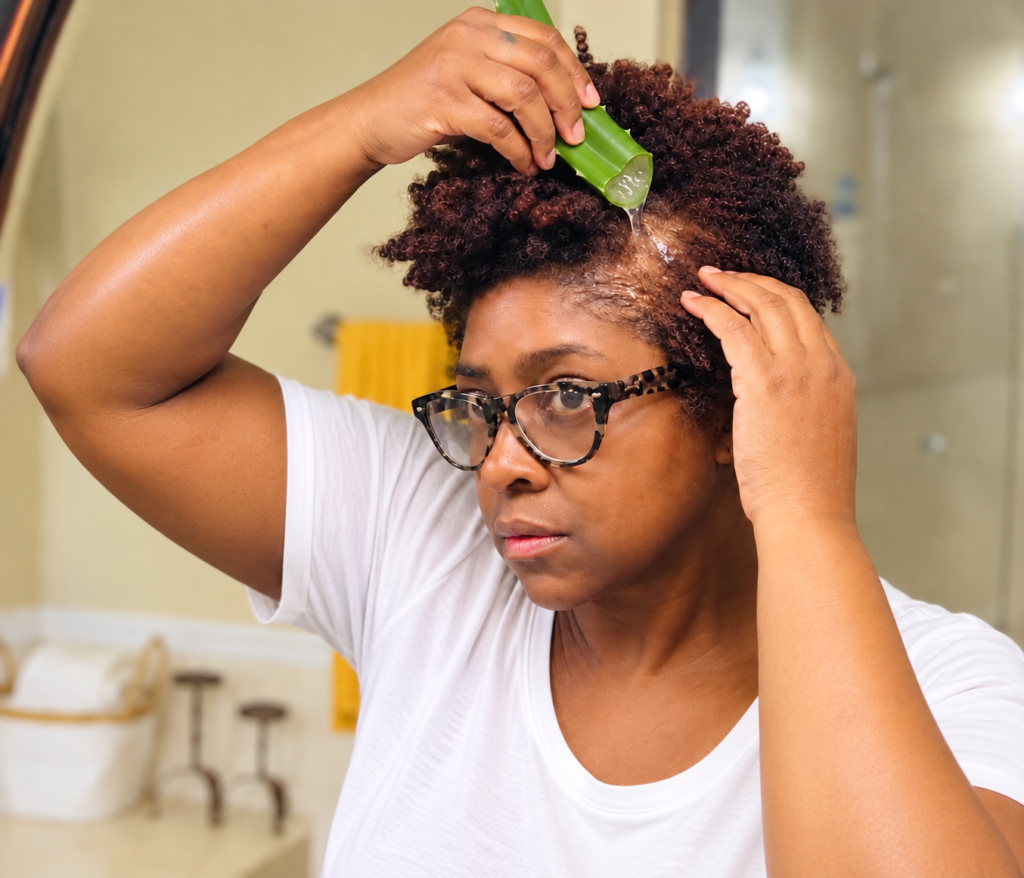
6. I Cool My Scalp With Aloe Vera Gel
When my scalp feels hot, irritated or uncomfortable, cooling it feels wonderful.
One of the things I personally reach for is aloe vera gel.
I keep this simple, too. I don’t want an aloe product loaded with fragrance, alcohol or a long list of unnecessary ingredients when my scalp is already irritated.
For me, the purpose is soothing and cooling—not treating the underlying CCCA.
That’s an important difference.
7. I Try Not to Scratch
This can be easier said than done.
When your scalp is itching, burning or uncomfortable, the natural reaction is to scratch it.
But aggressive scratching can further irritate an already inflamed scalp. Instead, I try to soothe the area and pay attention to what my scalp is telling me.
If the discomfort keeps increasing rather than settling down, that’s information I take seriously.
8. I Keep My Prescription Medication Available
I have clobetasol prescribed for my scalp.
I personally try not to reach for it automatically every time my scalp feels a little uncomfortable. I first look at what’s going on and use the supportive measures that work for me.
However, if my symptoms become significant, I will use my medication as prescribed.
And I want to emphasize the words as prescribed.
Clobetasol is a potent prescription corticosteroid. It isn’t something I recommend someone else use simply because I use it. Treatment for CCCA should be determined with a dermatologist or other qualified healthcare professional.
9. Most Importantly, I Pay Attention
This may be the most important part of my flare routine.
I don’t ignore my scalp anymore.
I notice when something changes.
I notice itching.
I notice burning.
I notice tenderness.
I notice unusual sensitivity.
And I think about what was happening before those symptoms appeared.
Living with CCCA for more than a decade has taught me that knowing your own baseline is incredibly valuable.
You begin to recognize when something isn’t normal for you.
A Flare Is Information
I no longer look at a scalp flare as simply something annoying that I need to make disappear.
I look at it as information.
My scalp is telling me that something has changed, and that’s when I start asking questions.
What have I been eating?
How stressed have I been?
Have I been exercising?
How have I been sleeping?
Is my scalp clean?
Did I change products?
Have I changed my hairstyle or put more tension on my scalp?
And most importantly: Is this something I can monitor, or is it time to contact my dermatologist?
Because with a scarring alopecia like CCCA, I don’t believe persistent or worsening symptoms should simply be covered up with products.
My personal philosophy has become:
Support the scalp. Pay attention to the signals. Keep the routine simple. And know when it’s time to get professional help.
One Last Thing
Everything I’ve shared here is what I personally do when my scalp flares. I’m a trichology student living with CCCA myself, and I’m sharing my experience for education—not prescribing a treatment plan.
Your scalp may need something completely different.
But whether you’re dealing with CCCA or another scalp concern, I encourage you to start paying attention to your patterns. Sometimes the first step isn’t adding another product.
Sometimes it’s simply asking:
“What is my scalp trying to tell me?”
This article is for educational purposes and shares my personal experience. It is not medical advice and does not replace evaluation or treatment by a dermatologist or other qualified healthcare professional.