
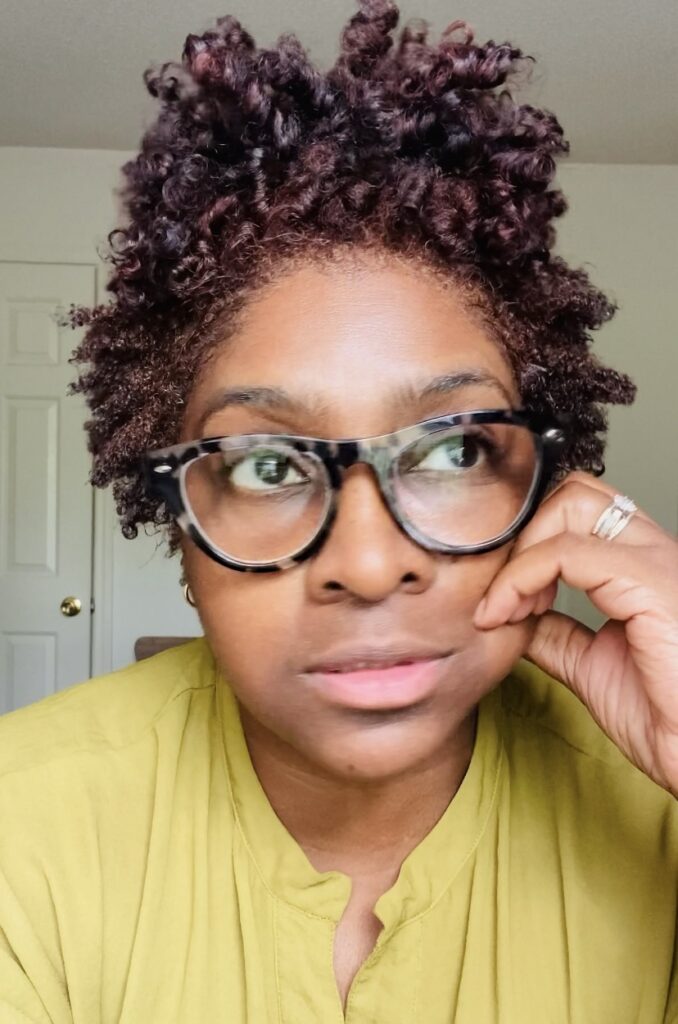
For many women, CCCA (Central Centrifugal Cicatricial Alopecia) is much more than a hair condition. It can quietly affect confidence, relationships, self-image, and emotional well-being in ways that are difficult to explain to someone who has never experienced it.
People often say, “It’s just hair.”
But when you’re the one watching your crown become thinner month after month, when styling your hair becomes a daily challenge, or when you’re afraid a friend or co-worker might notice a bald spot, it doesn’t feel like “just hair.”
It feels personal.
As someone living with CCCA myself, I understand that feeling.
Hair Is More Than Hair
Hair has always been deeply connected to identity, culture, beauty, and femininity—especially for many Black women. Our hairstyles often tell stories about our families, traditions, creativity, and personalities.
When CCCA begins to take that away, it can feel like you’re losing a part of yourself.
You may find yourself:
- Avoiding mirrors.
- Canceling social events.
- Wearing wigs more often.
- Constantly checking your scalp.
- Spending hundreds or even thousands of dollars searching for a cure.
- Feeling anxious every time you wash your hair.
These feelings are more common than many people realize.
The Grief That No One Talks About
Hair loss often brings real grief.
Not because you’re vain.
But because you’re mourning something that has always been part of who you are.
Grief doesn’t only happen after losing a loved one. It can happen after losing something that matters deeply to you.
Some women experience:
- Shock after receiving a diagnosis.
- Fear about how much more hair they may lose.
- Anger that they didn’t recognize the signs sooner.
- Guilt over hairstyles they once wore.
- Frustration after trying treatment after treatment.
- Sadness when progress feels slow.
These emotions are valid.
The Hidden Anxiety of CCCA
Many women become hyperaware of their scalp.
You may find yourself taking pictures every week.
Checking the mirror several times a day.
Wondering if your part looks wider.
Panicking when you see hair in the sink or shower.
Every little change can feel enormous.
Living with that constant uncertainty is emotionally exhausting.
When Confidence Takes a Hit
CCCA can affect confidence in ways that extend far beyond your appearance.
You may hesitate to:
- Date.
- Take family photos.
- Go swimming.
- Exercise where people can see your scalp.
- Sit under bright lights.
- Attend special events.
Some women even avoid professional opportunities because they feel self-conscious about how they look.
The emotional burden can quietly influence nearly every area of life.
Stress Can Become Part of the Cycle
One of the difficult realities of CCCA is that stress can make everything feel worse.
Many women notice that periods of intense emotional stress seem to coincide with increased scalp tenderness, itching, or flare-ups. While stress isn’t considered the sole cause of CCCA, it may contribute to inflammation or make symptoms feel more noticeable in some people.
That creates a frustrating cycle:
You lose hair.
You become stressed.
The stress affects your body.
Then you worry even more about your hair.
Breaking that cycle often means caring for both your scalp and your emotional health.
You’re Not Alone
One of the hardest parts of CCCA is feeling like no one understands.
Friends may not notice the changes.
Family members may unintentionally minimize your feelings.
Others may suggest products or home remedies without understanding what CCCA really is.
But there are thousands of women walking this same journey.
You are not alone.
You are not imagining your emotions.
And your feelings deserve compassion.
What Helped Me
My own journey with CCCA has taught me that healing isn’t only about shampoos, medications, or scalp treatments.
It’s also about learning to care for myself as a whole person.
For me, that has included:
- Working to reduce stress.
- Choosing nourishing foods.
- Staying consistent with my treatment plan.
- Taking care of my overall health.
- Leaning on my faith during discouraging seasons.
- Remembering that my worth isn’t determined by the amount of hair on my head.
Some days are easier than others.
But I’ve learned that hope can exist even while you’re still healing.
There Is Hope
If you’ve been feeling discouraged, I want you to know this:
A diagnosis of CCCA is not the end of your hair story.
Early treatment may help slow progression, and many women are able to preserve existing hair with appropriate medical care. Even when regrowth is limited, there are still meaningful steps you can take to support your scalp health, improve your confidence, and regain a sense of control.
Most importantly, your value has never depended on your hairstyle.
You are still beautiful.
You are still worthy.
And you are so much more than your hair.
Ready for Your Next Step?
If this article spoke to your heart, I encourage you to schedule an evaluation with a dermatologist experienced in hair loss or a qualified trichologist if you haven’t already. Early diagnosis and treatment are important because CCCA is a scarring form of alopecia.
If you’d like additional support navigating your CCCA journey, I’d be honored to help. During my one-on-one coaching sessions, I help women understand their diagnosis, prepare for dermatologist appointments, organize their questions, evaluate their current hair-care routine, and build healthy scalp-care habits that support long-term scalp wellness.
And if you’re not quite ready for coaching, download my free 3-Day Scalp Fire Soothing Blueprint to begin learning simple habits that may help calm an irritated scalp while you continue your treatment plan.
About the Author
Hi, I’m Tonya Renee, founder of Tonya Renee Trichology.
After being diagnosed with CCCA in 2014, I made it my mission to understand the condition and help other women navigate it with knowledge and hope. As a student trichologist, I share educational resources designed to help women better understand CCCA, care for their scalp, and feel more confident throughout their hair journey.
Calmer Scalp First. Growth Second.
Because healthy hair begins with a healthy scalp.
With hope,
Tonya Renee
Student Trichologist | Future Certified Trichologist
Helping women with CCCA understand their scalp, calm inflammation, and protect the hair they have.
Disclaimer: This article is for educational purposes only and is not intended to diagnose, treat, or replace medical advice. Always consult a qualified healthcare professional or dermatologist regarding your individual condition.