
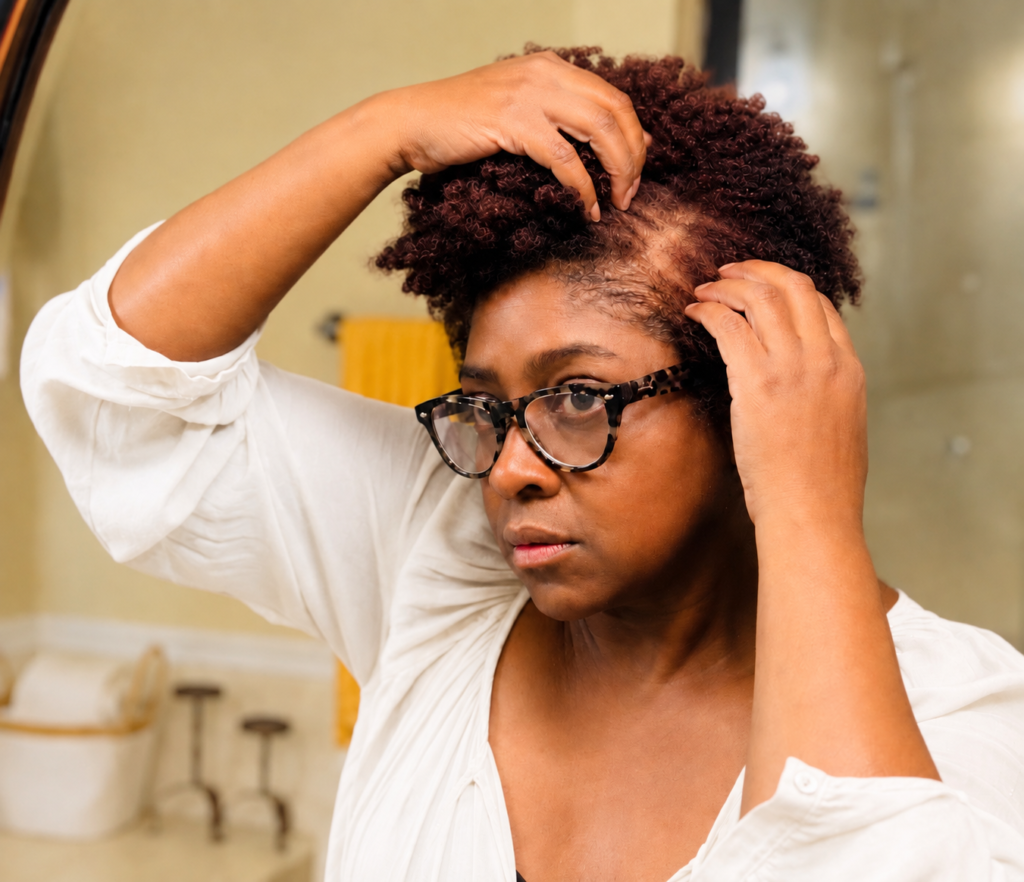
Back in 2014, I noticed my hair was thinning. I had just moved to a new state where I didn’t know anyone, so I told myself it was probably stress.
Then I thought maybe it was perimenopause.
Maybe I wasn’t taking enough vitamins.
Maybe it would grow back on its own.
But then the stinging, itching, and soreness began.
At that point, I knew something deeper was going on, but I still wanted every explanation except the one I eventually received.
Then I heard the words Central Centrifugal Cicatricial Alopecia, also known as CCCA.
I had never heard of it before.
When I learned that CCCA is a form of scarring hair loss, my heart sank. The word scarring terrified me because I thought it meant there was nothing I could do. I imagined losing all of my hair and feeling like I was losing a part of myself.
You see, my hair has been part of my identity since I was 13 years old.
For days, I felt sad, overwhelmed, and full of questions.
I searched the internet looking for answers, but much of what I found left me feeling even more discouraged, especially some of the images. Some articles were filled with medical terms I didn’t understand. Others made it sound as if hope was impossible. One article even suggested the best wigs for someone with my condition.
I was devastated.
What I needed wasn’t more fear.
I needed a plan.
Learning to Work With My Scalp Instead of Against It
Over time, I began learning everything I could about CCCA.
I discovered that inflammation plays a major role.
I learned how important it is to protect the hair follicles that are still healthy.
I started paying attention to my diet, stress levels, product ingredients, hairstyle choices, and scalp care routine. I also learned the importance of working with medical professionals when needed.
Most importantly, I learned that consistency matters far more than perfection.
There were good days.
There were frustrating days.
There were moments when I wondered if anything I was doing was making a difference.
But I kept going.
Progress Doesn’t Always Happen Overnight
One of the hardest lessons I learned is that healthy hair growth takes time.
We live in a world that promises instant results, but CCCA doesn’t usually work that way.
Sometimes the biggest victories aren’t inches of new growth.
Sometimes they are:
A scalp that no longer burns or aches.
Less shedding than before.
Increased confidence when looking in the mirror.
Knowing you’re doing everything you can to protect your follicles.
Those victories matter.
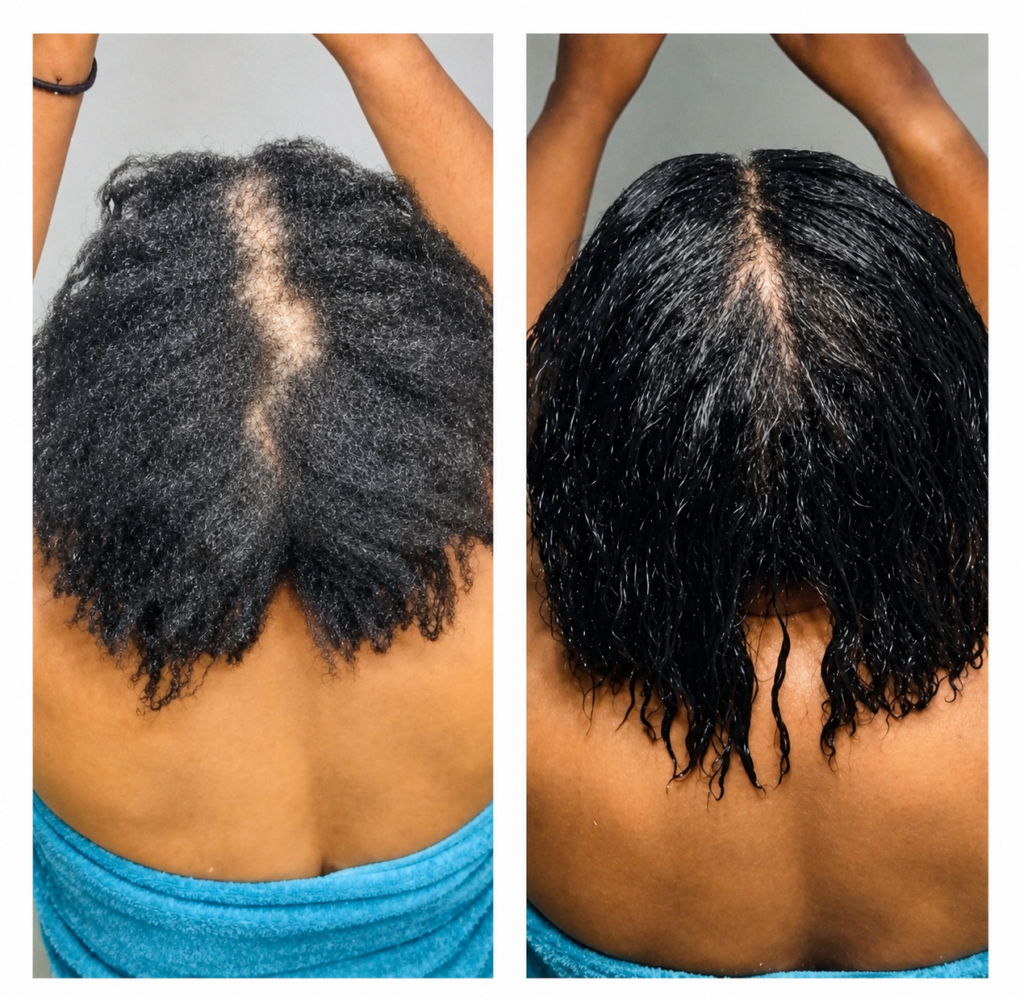
One of my favorite photos. It reminds me that catching CCCA early and staying consistent really can make a difference.
Why CCCA Led Me Toward Trichology
Years before my diagnosis, I went to cosmetology school and learned about trichology, the science of hair and scalp health. I remember being intrigued by it. Honestly, it excited me more than learning how to style hair.
I finished cosmetology school, but I didn’t think much about trichology again until my CCCA diagnosis.
My journey with CCCA changed my life in ways I never expected.
Instead of allowing fear to define me, I decided to learn everything I could about hair and scalp health. I also saw how consistent lifestyle changes helped me keep hair on my head.
That decision eventually led me to pursue training in trichology.
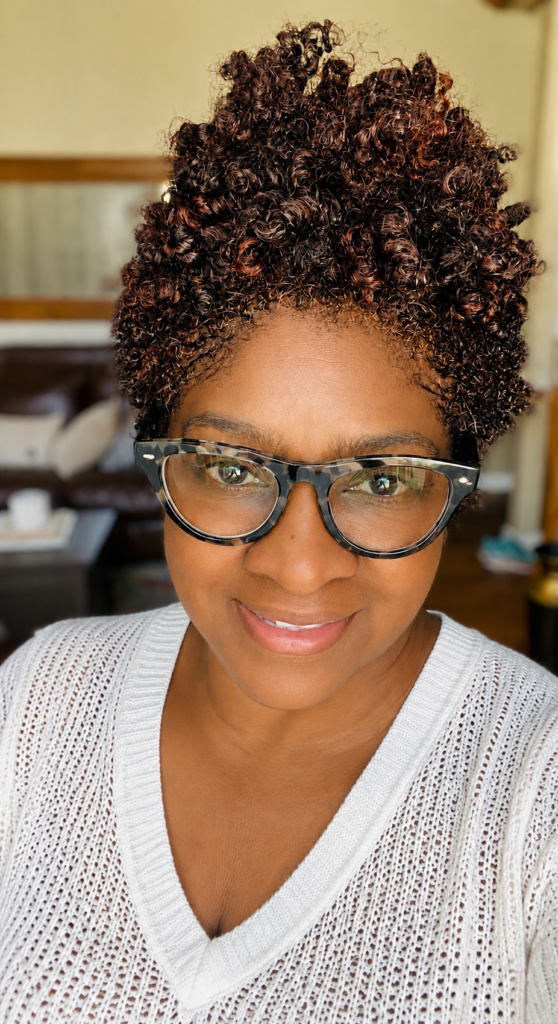
This is me today. My journey isn’t over, but I’ve learned that consistency and early intervention matter.
Today, my goal is simple:
To help other women understand their diagnosis, calm the fear that often comes with it, and give them practical tools they can use to care for their scalp with confidence.
I’m still on this journey myself.
I don’t pretend to have all the answers.
But I do know what it feels like to stare in the mirror, wonder what’s happening to your hair, and wish someone would simply say, “You’re not alone.”
So that’s what I’m saying to you today.
You’re not alone.
If You’re Just Beginning Your CCCA Journey
Take a deep breath.
CCCA is a serious condition, but a diagnosis is not the end of your hair story.
The earlier you begin protecting your scalp, the better your chances of preserving the hair you have and supporting healthier growth over time.
Start with small, consistent steps.
Ask questions.
Advocate for yourself.
Be patient with your progress.
And remember this:
Hope doesn’t come from pretending CCCA isn’t real.
Hope comes from knowing that there are things you can do today to care for your scalp and protect your follicles.
That’s exactly why I created this website — to walk this journey with you, one step at a time.
You don’t have to walk this journey alone.
If you’ve recently been diagnosed with CCCA—or you’re trying to understand why your hair is thinning—I created this website to provide trustworthy information, practical guidance, and hope.
Explore the blog, download my free guide, and remember:
Early action can make a difference.
About the Author
Hi, I’m Tonya.
I’m a trichology student with a passion for helping women understand and navigate CCCA. My interest in hair and scalp health became deeply personal after being diagnosed with CCCA myself in 2014.
Since then, I’ve dedicated countless hours to learning about inflammation, scalp health, nutrition, and lifestyle habits that support healthy hair. While I’m still on my own journey, my mission is to educate, encourage, and empower women with practical, evidence-based information so they can make informed decisions about their hair health.
Through Tonya Renee Trichology, I share educational articles, practical resources, and tools designed to help women feel less overwhelmed and more hopeful after a CCCA diagnosis.
Because no woman should have to face CCCA alone.
Tonya Livingston
Founder, Tonya Renee Trichology
Trichology Student | CCCA Advocate
Disclaimer:
The information provided on this website is for educational and informational purposes only and is not intended to diagnose, treat, cure, or prevent any medical condition. The content reflects my personal experience with CCCA along with my education in trichology and should not replace professional medical advice. Always consult a qualified dermatologist or other licensed healthcare provider regarding concerns about your scalp, hair, or overall health before starting or changing any treatment.